ISO 27001 for U.S. Companies: Why International Clients Are Asking for It
Published
September 17, 2026
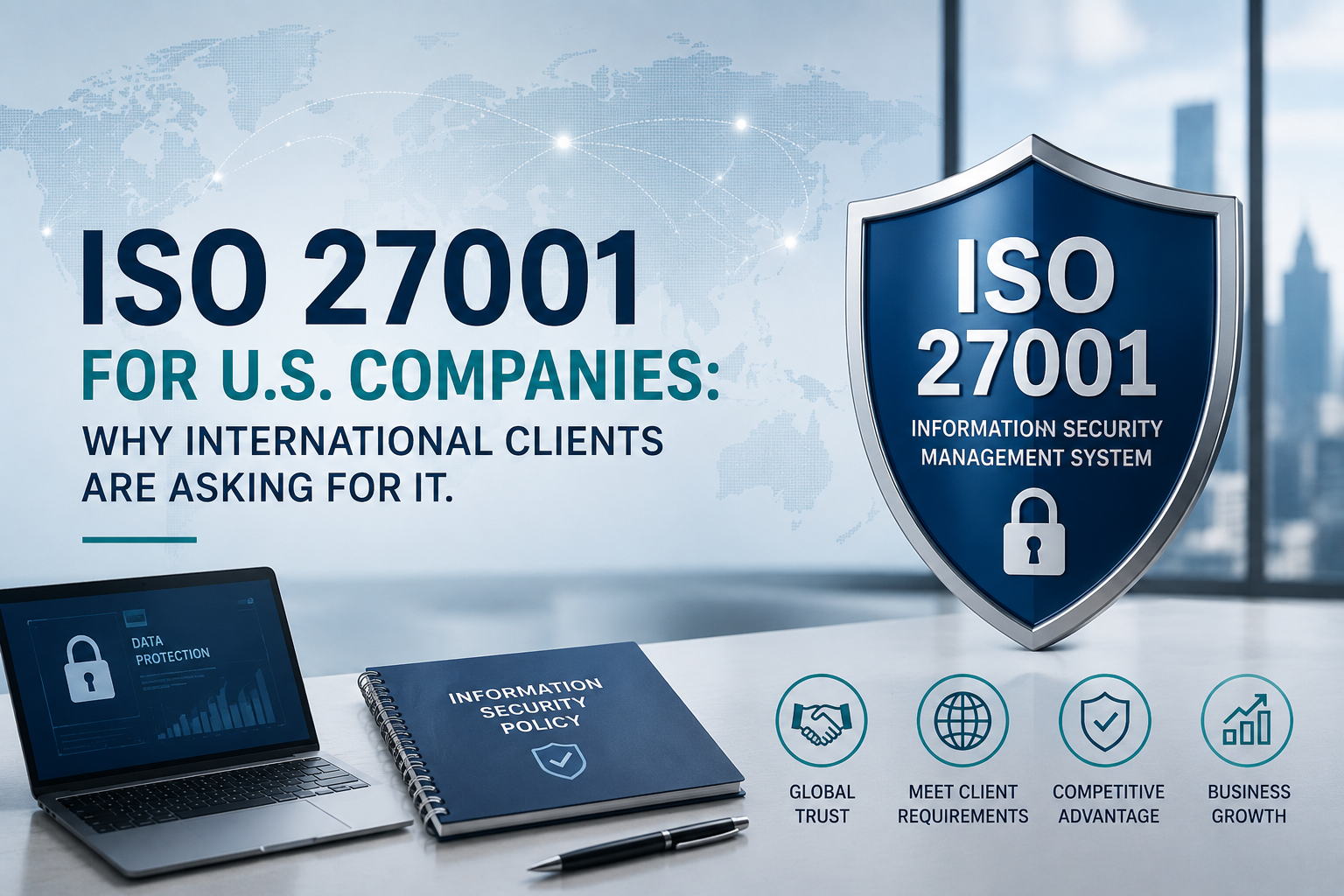

You've invested in strong security, built a reliable product, and are finally attracting international customers. Then a promising deal slows down because of one unexpected question: "Are you ISO 27001 certified?"Suddenly, your security practices aren't the only thing under scrutiny. That's why ISO 27001 for U.S. Companies has become more than a compliance milestone—it's a powerful trust signal that can influence global procurement decisions.
This guide will discuss why international clients are increasingly requesting ISO27001, what this means for your business, and how to determine whether it is a good fit for your growth strategy.
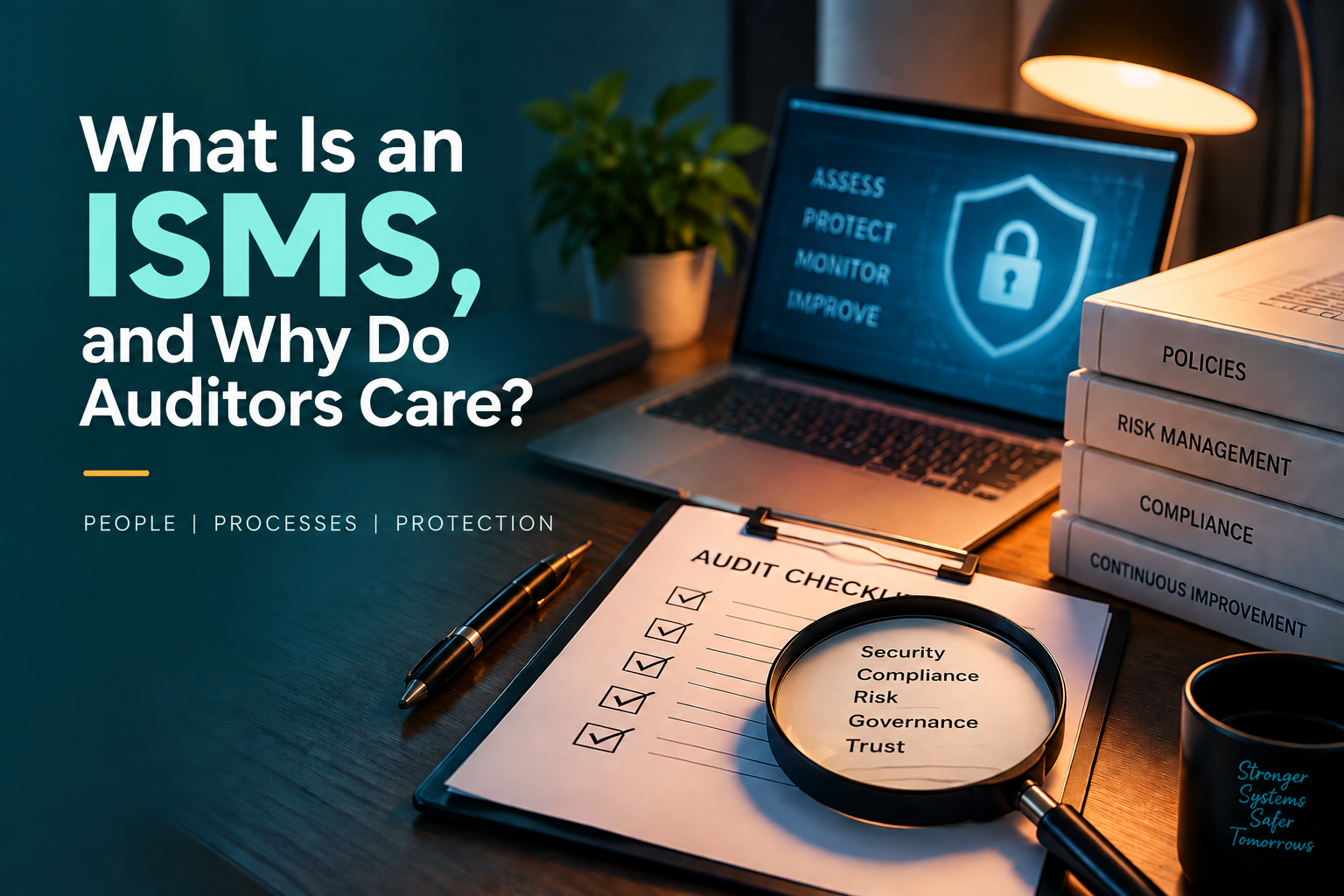
ISO/IEC 27001 is an international standard for establishing, maintaining, and improving an Information Security Management System (ISMS). Companies pursuing ISO 27001 compliance can use this framework to build a structured approach to information security. Instead of focusing on just one technology or control, it provides a clear framework for managing information security risks across your organization.
An ISMS helps organizations answer important questions such as:
● What information assets need protection?
● What risks could impact those assets?
● Which security controls should be implemented?
● How will those controls be monitored and improved over time?
Instead of taking a one-size-fits-all approach, ISO 27001 uses a risk-based methodology. Every organization identifies its own risks, assesses their potential impact, and implements controls appropriate to its business,industry, and operating environment.
Aneffective ISMS goes far beyond technical security tools.
It brings together people, processes, and technology to create a repeatable system for protecting information.
Amature ISMS will usually consist of:
● Information security policies
● Risk assessment and treatment processes
● Access control management
● Asset inventory and classification
● Incident response procedures
● Business continuity planning
● Supplier and third-party risk management
● Employee security awareness training
● Continuous monitoring and improvement
The aim is not just to stop cyber attack attempts. It's about creating a security program that evolves with your changing business, technology, and risks.
One of the most common questions executives ask is:
"Do U.S. companies have to become ISO 27001 certified?"
The short answer is no.
There is no federal law in the U.S. That says every company must be ISO27001-certified. Instead, certification often becomes commercially important due to customer expectations, procurement requirements, investor due diligence,or industry-specific obligations, rather than a universal legal mandate.
That distinction is important.
Many organizations mistakenly assume that if ISO 27001 isn't legally required, it isn't worth pursuing.
Infact, some of the biggest reasons to get certified come from the market, not from regulators.
Even if the law doesn't require certification, your customers might.
International enterprise organizations frequently include ISO 27001 in their vendor assessment process because it provides a globally recognized benchmark forinformation security management.
Certification may become valuable when:
● A multinational customer requires it during procurement.
● It's a component of vendor security questionnaires for enterprise buyers.
● Your company plans to expand into international markets.
● Partners demand well-known security credentials before sharing sensitive data.
● Investors want evidence ofmature operational governance.
● You compete against vendorsthat already hold ISO 27001 certification.
Inthese situations, ISO 27001 becomes less about regulatory compliance and moreabout meeting commercial expectations.
Itcan be useful to know this difference to help organizations focus on their compliance strategy.
Legal Requirement Business Requirement
Established by laws or regulations. Established by customers,contracts,procurement teams, or business partners.
Non-compliance may result in legal or regulatory penalties. Non-compliance may delay or prevent sales opportunities.
Applies only where specific regulations exist. Varies depending on customer expectations and industry practices.
Usually enforced by government or regulatory bodies. Usually enforced through procurement processes and contractual obligations.
Formany U.S. Businesses, the question isn't whether ISO 27001 is legallymandatory. It's whether obtaining certification will help remove barriers to international growth.
If your company already follows strong security practices, you might wonder why an international client still asks for ISO 27001.
The answer has less to do with geography and more to do with consistency, trust,and risk management.
Large organizations work with hundreds—or even thousands—of vendors across multiplecountries. Evaluating every supplier using different security standards wouldbe inefficient and time-consuming.
ISO27001 provides procurement teams with a common framework for assessing information security, regardless of a vendor's location.
International organizations often need a standardized way to compare vendors.
Because ISO 27001 is recognized worldwide, it provides a common language for information security.
Insteadof interpreting dozens of security frameworks, procurement teams can evaluatesuppliers against a single internationally accepted standard.
Enterprise sales often involve extensive security reviews.
Whena company holds ISO 27001 certification, buyers may have greater confidence that core security management practices have already been independently assessed.
While certification doesn't eliminate security questionnaires, it can make those conversations more efficient.
International clients aren't only interested in technical safeguards.
Theyalso want to know:
● How security risks are identified.
● Who is responsible formanaging those risks.
● Whether leadership is involved.
● How policies are reviewed and improved.
● Whether security processes operate consistently across the organization.
ISO27001 emphasizes governance as much as technology, giving buyers greater confidence in your overall security management approach.
Every enterprise procurement process is designed to reduce risk.
Certification provides independent evidence that your organization follows a structured approach to managing information security, making vendor assessments more predictable and consistent.
Many international organizations transfer sensitive information across multiple jurisdictions.
Working with vendors that follow an internationally recognized security management framework can help simplify internal risk assessments and strengthen confidence in cross-border business relationships.
International clients aren't asking for ISO 27001 simply because it's an international standard.
They're asking because it provides a globally recognized way to evaluate how vendors manage information security, reduce business risk, and demonstrate ongoing operational maturity.
ForU.S. companies pursuing international growth, certification is increasingly becoming a business differentiator—not just another compliance initiative.
A common mistake companies make is assuming that international buyers only care about seeing an ISO 27001 certificate.
In reality, experienced procurement teams often look beyond the certificate itself.
They want confidence that your security program functions effectively in day-to-day operations—not just during an audit.
Buyers want to understand:
● Which products and services are covered.
● Which business units fall within scope.
● Which systems and location sare included.
A clearly defined scope helps customers understand exactly what has beenassessed.
Security risks change constantly.
International clients expect organizations to have an established process for:
● Identifying risks
● Evaluating their impact
● Prioritizing remediation
● Reviewing risks regularly
An effective risk management process demonstrates that security decisions areproactive rather than reactive.
The Statement of Applicability explains which ISO 27001 controls your organization has implemented and why.
It also documents any controls that aren't applicable based on your business environment.
This transparency helps demonstrate thoughtful security governance rather than a one-size-fits-all approach.
Customers demand that data is accessible only to their authorized users.
This typically includes:
● Identity and access management
● Multi-factor authentication
● User provisioning
● Privileged access management
● Regular access reviews
No organization can guarantee that security incidents will never occur.
What matters is how effectively they respond.
International buyers often look for evidence that your company has:
● Incident response procedures
● Business continuity plans
● Disaster recovery processes
● Clearly assigned responsibilities
● Regular testing and review
Your vendors can become your customers' risks.
That's why international organizations increasingly expect suppliers to evaluate the security practices of their own third-party providers.
An effective supplier risk management process demonstrates a mature security program.
Technology alone doesn't protect information.
Employees play a critical role.
Organizations should provide regular training that helps staff recognize:
● Phishing attacks
● Social engineering
● Password security
● Data handling responsibilities
● Incident reporting procedures
Perhaps most importantly, buyers want evidence that security controls are operating consistently—not simply documented in policies.
They want confidence that your ISMS is part of your everyday business operations.
Successful ISO 27001 certification begins long before the certification audit.
Organizations that treat certification as the final step—rather than the starting point—usually experience a smoother implementation and stronger long-term security outcomes.
Identify:
● Business units
● Products
● Information assets
● Technologies
● Locations
Thatwill be part of your ISMS. The right scope helps ensure that implementationremains manageable and that the certification aligns with business priorities.
Assess your current security posture before implementing measures.
An ISO27001 readiness assessment can help to identify:
● Existing strengths
● Compliance gaps
● Missing documentation
● Technical improvements
● Process maturity
Knowing where you begin helps to avoid rework later on.
Developpolicies, procedures, governance structures, and risk management processes thatalign with ISO 27001 requirements.
Thisisn't about copying templates. It's about developing an ISMS that accuratelyreflects your organization's actual operations.
Securitycontrols must become part of normal business activities.
Teamsshould keep doing:
● Access reviews
● Risk assessments
● Vendor evaluations
● Incident responseactivities
● Employee training
● Internal monitoring
Justhaving documentation isn't enough. Organizations should gather evidencedemonstrating that security processes are functioning as intended.
Internalreviews also provide opportunities to identify areas for improvement beforecertification.
Onceyour ISMS has matured and supporting evidence is available, an accreditedcertification body performs the certification audit.
Successfulorganizations don't stop there. ISO 27001 emphasizes continual improvement,making ongoing monitoring and periodic reviews essential to maintainingcertification.
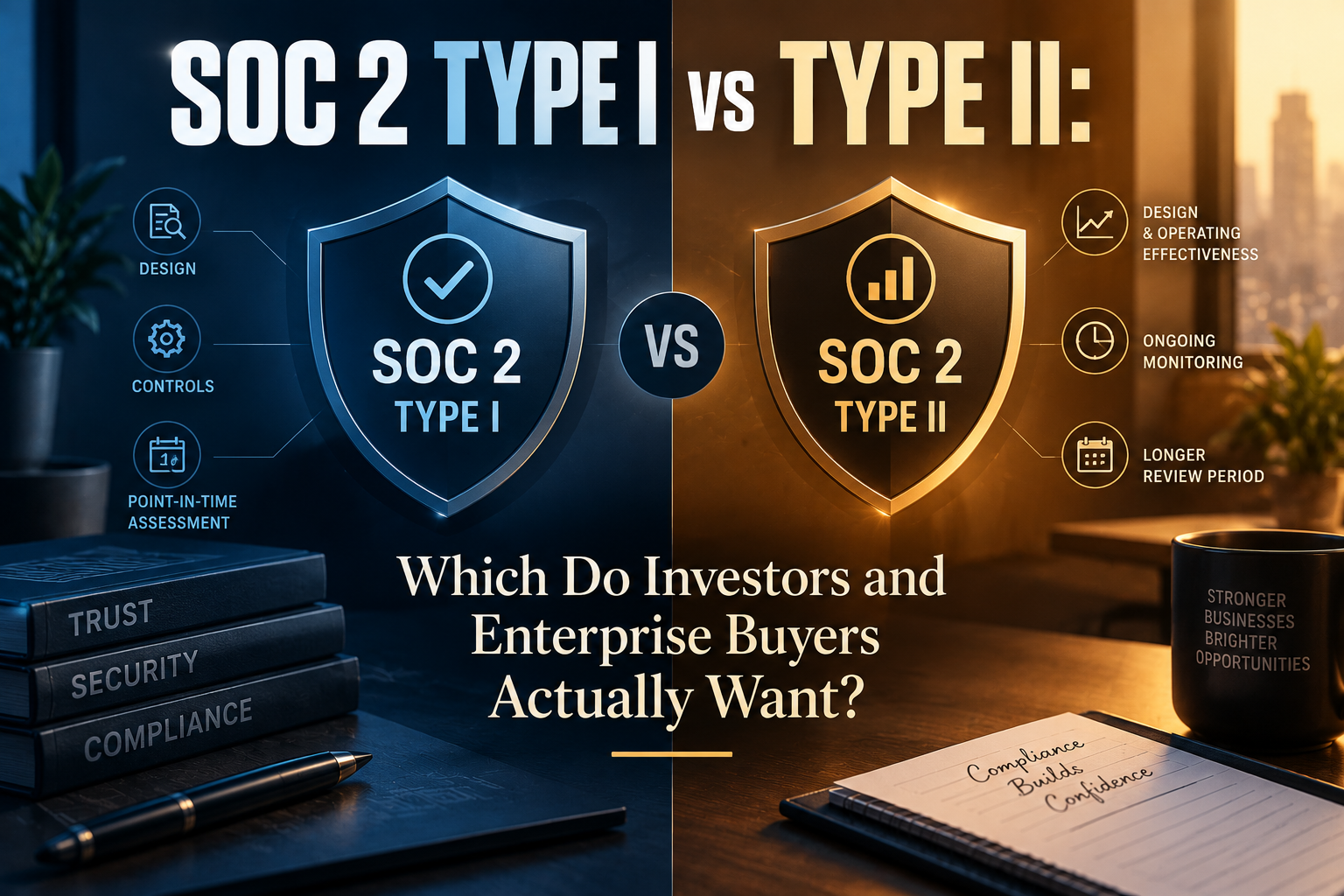
One of the biggest misconceptions in cybersecurity compliance is that companies must choose either ISO 27001 or SOC 2.
Inreality, the right answer depends on your customers, your markets, and your long-term business strategy. Many growth-stage companies ultimately pursue both because they serve different but complementary purposes.
Preparing for ISO 27001 isn't about collecting templates or rushing toward an audit.
It's about building an Information Security Management System that supports your business, satisfies customer expectations, and remains effective long after certification.
BrightLine works with growth-stage and mid-market organizations to create practical compliance programs, providing vCISO leadership that strengthens security while supporting commercial objectives—not just audit readiness.
Whether your goal is to satisfy international customer requirements, strengthenenterprise sales, or establish a long-term compliance strategy, BrightLinehelps you build security programs that create lasting business value.
For many years, ISO 27001 was viewed primarily as an international compliancestandard.
Today,it's much more than that.
For U.S. Companies selling into global markets, ISO 27001 has become a powerful trust signal that demonstrates your organization manages information security through a structured, repeatable, and continually improving system.
That doesn't mean every business needs certification immediately.
If your customers aren't asking for it and your growth strategy is focusedexclusively on domestic markets, another framework may better align with yourcurrent priorities.
If you are looking to expand internationally, focus on enterprise clients, orshare sensitive data, and security-related procurement delays are frequent,then ISO 27001 can offer a significant competitive benefit.
The most successful organizations don't pursue certification to display a logo on their website.
They build a mature Information Security Management System that strengthens operations, reduces risk, earns customer trust, and supports sustainable business growth.
Schedule a 30-Minute ISO 27001 Readiness Conversation with BrightLine. Prepare before certification becomes a sales deadline. Build an Information Security Management System that supports both compliance and long-term business growth.